Berries and More
Elderberries (Sambucus)
General Info and Identification
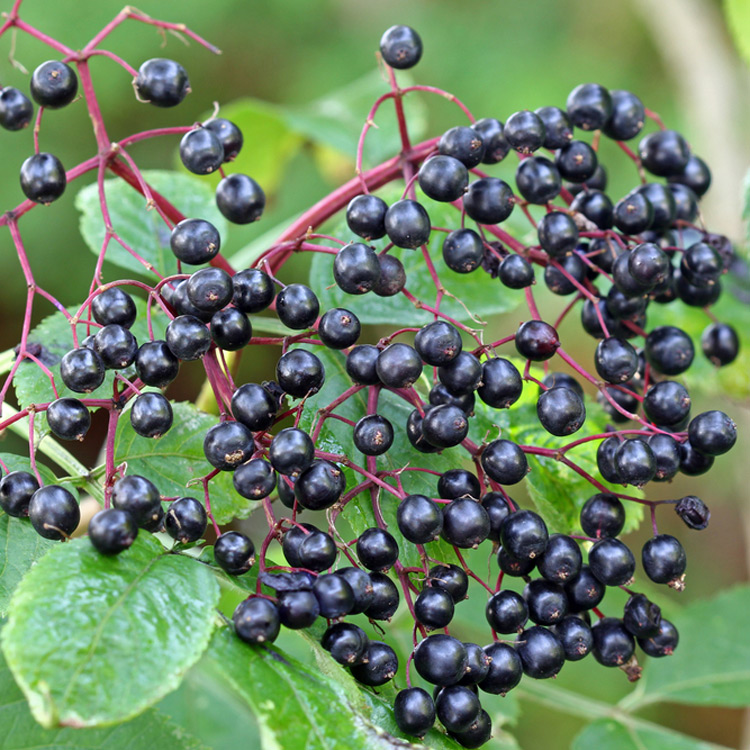
There are two types of elderberries, blue elderberries, Sambucus cerulea, native to North America and black elderberries, Sambucus nigra, native across Europe. Regarding blue elderberries, they can be identified by their leaves which run opposite to each other. Per each cluster of berries, there are around 5-9 leaves per cluster of berries. The plant can further be identified by the jagged edges of its leaves along with its small white flowers which grow into the elderberries.
Harvesting
Elderberries grow into the late summer, sometimes all the way into October. They grow in clusters around forest and river edges along with other similar environments. Once the berry reaches a blue/purple hue, they are ready for harvest. It is best to snap the entire stem above the cluster off rather than picking the berries off one by one.
Safety
Like most berries, Elderberries may resemble other far more dangerous ones. It is extremely important to only consume if you are absolutely certain the berries are safe. Even when in possession of elderberries, it is important to not eat them in large quantities or when unripe. Doing so could be toxic and cause unnecessary complications.
Uses
Elderberries are used as an ingredient in many recipes including jams, syrups, tinctures, desserts, various drinks, or as toppings in other dishes. The berries medicinal benefits include its high vitamin C content, its status as an antioxidant, and its immune boosting qualities which is why it often acts as an ingredient within cold and flu remedies.
Recipe
Ingedients:
- Dried elderberries: ⅔ cup
- Water: 3 ½ cups
- Ground cinnamon: 1 tsp
- Ground clove: ½ tsp
- Fresh ginger: 2 Tbsp
- Raw honey: ½ cup
Elderberry Syrup
- In a medium pot, add dried elderberries, water, cinnamon, clove, and finely grated ginger. Bring the mixture to a boil.
- Let it simmer for around 45 minutes until the liquid is reduced by about half.
- Use a mesh strainer to empty the mixture into a large bowl, press the berries for the most juice.
- After it has cooled, add honey and stir well.
- Pour the syrup into a quart jar and store it in the refrigerator.

Black Chokeberries (Aronia melanocarpa)
General Info and Identification
Black chokeberries are deciduous shrubs which get their name from the bitter fruit it produces. They love environments with lots of water and can withstand different soil pH levels or sandy/clay soils. In the springtime clusters of small white flowers are present. They can reach 3-5 feet in height and 2-6 feet in width. The fruit is ½ to ⅓ inch in diameter when ripe. In autumn the glossy purplish black or black fruit can be found in clusters. Additional identifying characteristics include: leaves which are nearly oval shaped and have teeth along the edge, absence of thorns on the plant, thin/smooth bark, and multiple stems that form dense colonies.
Harvesting
When ripe, the fruit turns a glossy black color (unripe berries may still have a reddish tint on them). Harvest time is late summer to early fall. To harvest multiple berries at once, grasp the cluster and pull your hand down. Can be picked similar to other berries.
Safety
The berries look similar to deadly nightshade berries. Since they can grow in rougher terrain like cliffs or bogs, use caution when foraging.
Uses
Since they love wet soil, they can be used to dry up flooded areas. The fruit is high in antioxidants and can be used much like any other berry in food items such as jams or jellies, syrups, teas, juice, or as described below, baked goods.
Recipe
Ingedients:
- 125 grams of room temperature butter
- 100 grams of caster sugar
- 2 large eggs
- 2 teaspoons of vanilla sugar
- 2 teaspoons of baking powder
- 210 grams of all purpose flour
- 100 grams of milk
- 100 grams of fresh chokeberries
Chokeberry Muffins
- In a large bowl, mix the butter and sugar. Add the eggs one at a time, stirring after each addition.
- In a separate bowl, mix the vanilla sugar, flour, and baking powder. Add this to the egg mixture then add milk and stir thoroughly.
- Add chokeberries and mix
- Pour into a muffin tray (12 muffins) and bake at 390F (200C) for 15-20 minutes.
Juniper Berries (Juniperus communis)
General Info and Identification
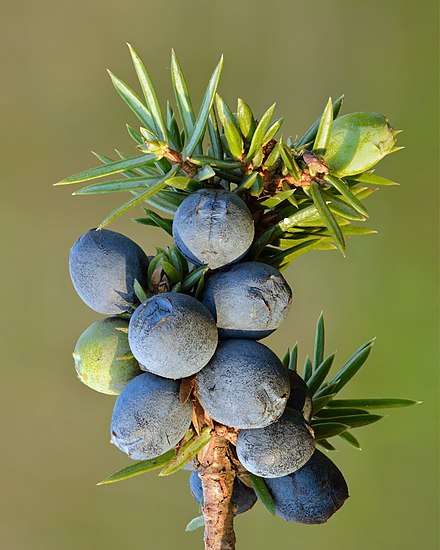
Juniper berries are known to grow in the northern hemisphere, throughout North America, Europe, and Asia. Juniper bushes are a type of evergreen. Since the berries grow on bushes they are easy to cultivate in the sense that you do not need to replant them every year, but it will take years before a bush is able to grow enough to produce the berries. The fruit looks similar to that of blueberries, though they are smaller, lighter in color, and are more egg-like in shape. Juniper berries take 18 months to ripen, so they can only be collected every two years.
Harvesting
The berries will be a blue-ish purple as compared to their green color when they aren’t ripe. The berries are typically found in groups of three. They can easily be plucked from its bush once they are ripe.
Safety
These berries can be very dangerous if too many are eaten, so it's important to make sure you don’t consume more than 10 grams of the berries, 100 mg of the oil, or continuously eat them for 4 weeks, as it may lead to serious health issues.
Uses
Juniper berries are known to have medicinal properties that can aid in the relief of Urinary tract infections, kidney stones, and bladder stones, amongst other ailments. Juniper is often used in tea or used as an oil or supplement. It is not uncommon for a doctor to recommend a patient to take juniper supplements, and they can easily be found in my pharmacies or convenience stores. As with many flowers and berries, juniper can make for an excellent tea by steeping the dried berries in boiling water for about 5 minutes. They can also be used in a variety of cocktails, whether it be it as a garnish, or having been infused into the alcohol. Gin is a very popular choice for this.
Recipe
Ingedients:
- 3 tbsp olive oil
- 2 tbsp dried and lightly crushed juniper berries
- 8 large garlic cloves
- 1 ½ lbs of mini potatoes
- Lemon juice
- Salt to taste
- Black pepper to taste
- ½ tsp oregano
Garlic Potatoes with Juniper Berries
- Heat oven to 350 degrees F. In an oven-safe dish (such as a casserole dish) pour your oil and berries, mix to coat the berries, and place in the oven for a few minutes.
- Trim the ends off the garlic and peel the shell of skin off of them, placing them, along with the unpeeled potatoes in the now warm dish.
- Bake for 10 minutes, then use a spoon to roll the potatoes around in the oil, berries, and garlic.
- Reduce the temperature of the oven to 350 degrees F, and bake for an additional 50 minutes. Before transferring the potatoes, garlic, and berries onto a serving plate.
- Sprinkle with your seasonings.