Mushrooms
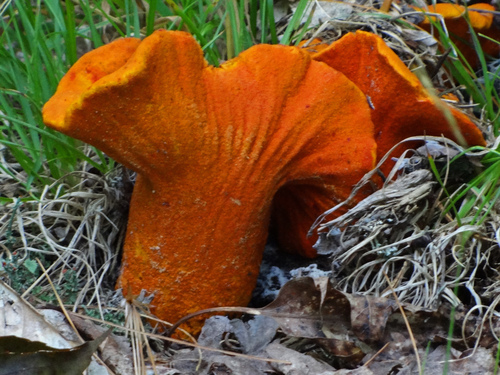
Lobster Mushroom (Hypomyces lactifluorum)
General Info and Identification
Lobster mushrooms are a parasitic ascomycete fungus from the Hypocreaceae family that grows on certain species of mushrooms, turning them a reddish orange color that resembles the outer shell of a cooked lobster. It is actually a combination of a parasitic fungus that has deformed a host mushroom in such a way as to alter its color, texture, shape and taste. They have a seafood-like flavor and a firm, dense texture. Fresh mushrooms have a very mild flavor and aroma of shellfish or crustaceans which intensifies when dried. When cooked in oil it alters the oil's color to a yellow or even red hue. They are widely eaten and enjoyed freshly foraged and cooked.
Harvesting
There can be quite a lot of dirt trapped in the deformed sections of this mushroom, so some trimming may be necessary. It is best to collect your mushrooms in a sturdy basket or bucket, or a cloth bag. It’s also a good idea to keep a soft-bristled brush on-hand so you can give the mushrooms a quick cleaning to remove excess sand or debris before putting them into your basket or bag. At home, wash the mushrooms with cold water, then dry on towels. After cleaning, store the mushrooms in a ZipLoc bag with a dry paper towel. They are quite firm and will last under refrigeration for at least a couple weeks. These can be found from mid-summer to early fall. A perfect mushroom should be heavy like a paperweight. If the mushroom feels light like Styrofoam, has a strong fishy odor or dark purple color, they're too old to eat. If it looks like a lobster, and is parasitized by the Hypomyces, it's edible. Lobster mushrooms will appear in the same area and around the same trees year after year. It is, accordingly, advised to mark the position where you found them growing so that you return to where you have discovered them in the previous season.
Safety
While edible, field guides note the hypothetical possibility that H. lactifluorum could parasitize a toxic host and that individuals should avoid consuming lobster mushrooms with unknown hosts, although no instances of toxicity have been recorded. There are also no known poisonous look-alikes. In color, the edible mushroom Laetiporus sulphureus can resemble H. lactifluorum, but that is the extent of the similarity. While there are no known incidents of allergic reactions to lobster mushrooms, care should be taken when initially consumed as with all untried species, especially when it is impossible to identify the host.
Uses
These mushrooms are widely prized for their seafood mimic properties, and are even commercially marketed, meaning it's even possible to find them in grocery stores. Although, foraging certainly adds an air of environmentally friendly fun and accomplishent to the final dish. They're used in everything from dyes to butter to rolls as well.
Recipe
Ingedients:
- ½ lb fresh lobster mushrooms trimmed, cleaned, and washed if necessary
- ½ teaspoon salt plus more to taste if needed
- ½ teaspoon fresh ground black pepper
- ¼ cup green onion trimmed and diced ¼ inch
- 1 tablespoon fresh sliced chives
- 1 teaspoon fresh chopped thyme
- 1 teaspoon smoked paprika
- 1 tablespoon all purpose flour or more as needed to form the cakes
- 1 whole large egg plus one egg yolk
- Clarified butter animal lard, oil, or a combination, as needed for sauteing the cakes
Lobster Mushroom Cakes
- Shred the lobster mushrooms on a box grater or through the shredding attachment on a food processor. Mix the shredded mushrooms thoroughly with the salt, then allow to sit for 10 minutes so the salt can draw out their water. Squeeze the shredded mushrooms to remove as much water as possible, then mix with the remaining ingredients except the cooking fat.
- In a nonstick or seasoned cast iron pan, heat a tablespoon or two of the fat until hot and shimmering. Form a small test cake and fry it on both sides until golden, then cool, taste, and judge the seasoning and texture. If the cakes seem difficult for you to form, add another pinch of flour. If you think they need more seasoning, add a pinch of salt, more herbs, etc and repeat the process until you like the taste.
- Working in batches, take a couple heaping tablespoons of the mushroom mixture and form into cakes, then fry a few minutes on each side slowly, and gently, until golden brown, flip and repeat, then serve immediately.
- If you're making a large batch, finished cakes can be held in a warm oven on a cookie rack until the others are done.
:max_bytes(150000):strip_icc():format(webp)/how-to-grow-and-care-for-morel-mushrooms-4686369-03-bc7020cd48344c5f8bee966eb8bcbced.jpg)
True Morels (Morchella esculenta)
General Info and Identification
True Morels are also called: common morels, true morels, yellow morels, or sponge morels. They are highly sought after for culinary purposes due to their rich taste. True morels can be found in forested environments, usually in the spring and are often found in groups but can be found alone. he mushroom cap varies in color from light brown, tan, yellow, or grayish brown and is conical shaped. They appear to have a sponge/honeycomb like design with lighter ridges (raised) and darker pits. The stem is white or pale cream. They have a completely hollow interior and produce white/cream colored spores, both of these characteristics are important to distinguish whether it is a true morel or false morel. The caps range in size from 1-3 inches wide and 1-4 inches tall while the stem ranges from 1-2 inches wide and 1-3.5 inches tall.
Harvesting
True Morels are harvested in early spring. When fully mature, they are 2-4 inches tall. The presence of a fully developed cap and a firm texture are additional signs it is ready to be harvested. To harvest, cut the stem just above soil level to leave the root system in the soil and reduce the amount of dirt in the harvest.
Safety
There are several look-alikes, commonly referred to as False Morels. These include: - Gyromitra esculenta: An irregular-shaped cap that has a brain-like shape. The cap ranges from reddish to dark brown. - Verpa bohemica: These have a wrinkled yellow cap with white stem. - Verpa conica: Have a bell-shaped yellow cap with white stem. - Phallus impudicus: Also called the common stinkhorn because it contains a smelly spore mass. Other false morels include Morchella species such as Morchella elata, Morchella angusticeps, and Morchella crassipes These species are toxic and can cause vomiting, dizziness, diarrhea, or death. True morels when raw are believed to contain gastrointestinal irritants so cooking before consuming is recommended to remove them.
Uses
True morels are culinary delicacies as they have a rich earthy or nutty flavor. They also have a high vitamin and antioxidant content. Morels are often used in soups.
Recipe
Ingedients:
- Quart of vegetable, beef, or chicken broth
- 2-3 cups of water
- 2 tablespoons of butter
- ½ cup of minced onion
- 2 minced cloves of garlic
- 2 cups of risotto rice
- ½ a pound of fresh morels
- 2 tablespoons of chopped chives or parsley
- ½ a cup of grated parmesan cheese
Morel Mushroom Risotto
- In a medium pot, pour 2 cups of water and 1 quart of the chosen stock. Gently bring to simmer.
- In a separate pot, saute the 2 tablespoons of butter and minced onion for about 3-4 minutes or until soft. Add the garlic, morels and risotto and continue cooking and stirring for 2-3 minutes.
- Once the liquid begins to evaporate, pour in ½ a cup of the hot stock (prepared in step 1) and stir. Add salt and continue to add ½ a cup of the broth when the liquid evaporates until the risotto is cooked but still firm.
- Add a little more stalk and the grated cheese and stir. Top with parsley or chives.
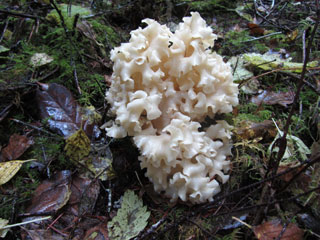
Cauliflower Mushroom (Sparassis americana)
General Info and Identification
Cauliflower mushrooms are hard to find, but worth the search. The mushroom has an umami flavor and a meaty texture when young. It consists of a cluster of white ribbons. The mushrooms can be tan or yellow if exposed to more sunlight.
Harvesting
These mushrooms are found during the late summer and early fall. It will be found at the base of a coniferous tree, as these are their preferred host. They can be harvested when at desired size, and of course older specimens will possess more edible material. Cauliflower mushrooms are actually quite east to harvest, as the entire mushroom can be cut off at the base.
Safety
Fortunately, there aren't any poisonous look-alikes to this mushroom due to their distinctive shape, so you can be fairly comfortable identifying and harvesting them should you come across one.
Uses
This mushroom is a highly sought-after ingredient for various dishes. They can be fried, eaten as mushroom steaks, put into soups, added to pasta dishes, or even used to replace noodles. It also has useful anti-tumor, anti-microbial, and anti-inflammatory properties.
Recipe
Ingedients:
- ¼ cup soy sauce
- 1 Tablespoon fresh lime juice or lemon juice in a pinch
- ¼ teaspoon grated garlic
- ¼ teaspoon grated ginger
- 1 teaspoon sriracha
- ½ Tablespoon fish sauce
- Zest of ¼ lime
- 2 oz melted butter, warmed (optional) or room temperature sesame oil
Steamed Cauliflower Mushroom with Ponzu Sauce
- Combine all ingredients aside from the mushrooms, mix well and refrigerate.
- Cauliflower mushrooms can be pulled into bite-sized pieces. If your mushrooms are wild, make sure to wash and dry them if necessary.
- Line a pot with a steamer basket.
- Add 2 inches of water to the pot then add the mushrooms.
- Put the lid on the pot and turn the heat to high.
- Bring the water to a boil, then reduce the heat to low and cook for 15 minutes. Keep the mushrooms covered during the cooking process.
- Remove the mushrooms and serve on a warm plate with the sauce on the side. Enjoy as an appetizer!